Working at height inside a live warehouse brings a constraint you do not face outdoors: you have to operate without disrupting the business, without filling the aisles with fumes, and without damaging a floor that is often expensive. Ladders and rolling scaffolds quickly show their limits on both safety and productivity. The electric scissor lift answers this brief precisely. Compact, quiet, and clean, it has become the reference solution for indoor work at height. Here is why, and when to switch to a different machine.
Why electric indoors
Indoors, electric power is not a comfort option, it is a necessity. Three reasons make the case:
- Zero emissions. No exhaust gas: the machine can work right next to the crews, in full operation, with no forced ventilation and no need to clear the area.
- Quiet running. The electric motor avoids the noise of an engine unit, which protects the working environment and makes shared activity easier.
- Non-marking tyres. Resin, polished concrete, and high-gloss floors stay clean, with no black streaks and no damage.
Where an engine-powered unit would force a halt to operations, the electric lift fits into the flow without disturbing it.
The compact scissor lift
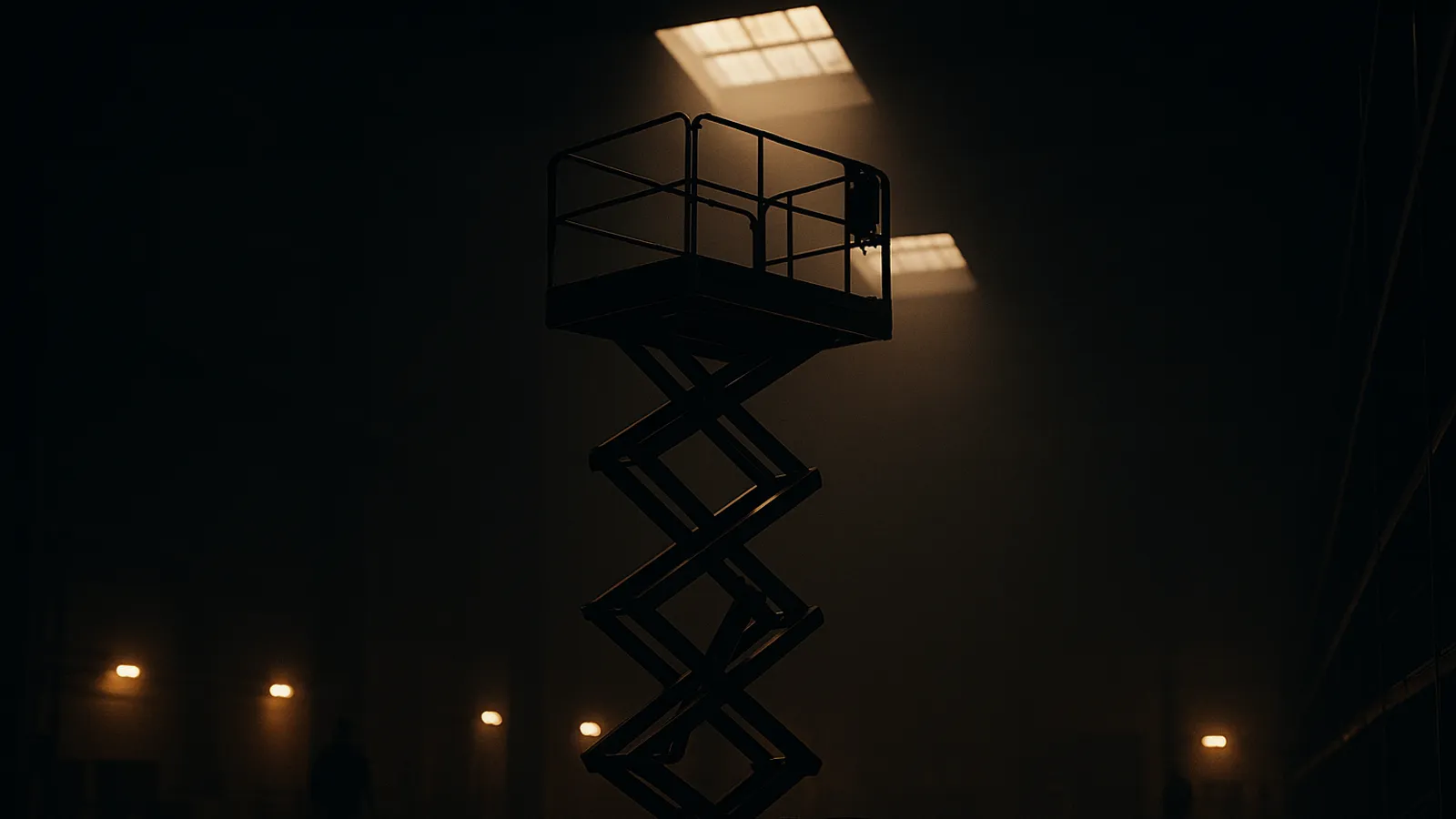
The electric scissor lift raises its platform straight up, directly above the machine. Compact models are built for indoor use: narrow width to clear standard doorways and maneuver in tight aisles, a reduced turning radius, and a large deck, often with a sliding extension, that carries operators, tools, and materials.
One thing to check every time: the allowable slab loading. On raised technical floors and suspended slabs, confirm the accepted floor pressure before bringing the machine in. The stowed dimensions also have to fit the tightest point on the route to the work area.
Typical indoor jobs
The scope for an electric scissor lift in a warehouse is broad:
- Building maintenance and upkeep of structures.
- Fitting and removing suspended ceilings.
- Electrical and HVAC work under the roof.
- High-bay picking and lighting in tall racking.
- Interior facade work reachable from the floor.
For all these tasks sitting directly above the machine, the scissor lift's large deck and payload make the difference compared with a boom platform.
When to move to an articulating electric boom
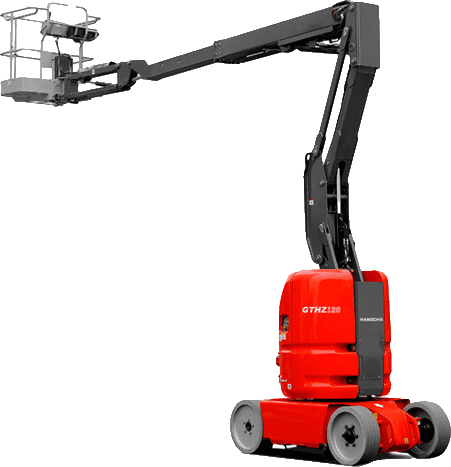
The scissor lift only goes straight up. As soon as you need to reach around an obstacle, get over a rack, or access a point behind a storage line or a structure, it reaches its limit. That is the role of the articulating electric boom: its hinged sections allow up-and-over reach and outreach, while keeping the indoor advantages of electric, zero emissions and non-marking tyres.
The choice comes down to one simple question: is the area to reach directly above the machine (scissor) or do you have to clear an obstacle to get to it (articulating)?
Battery and charging logistics
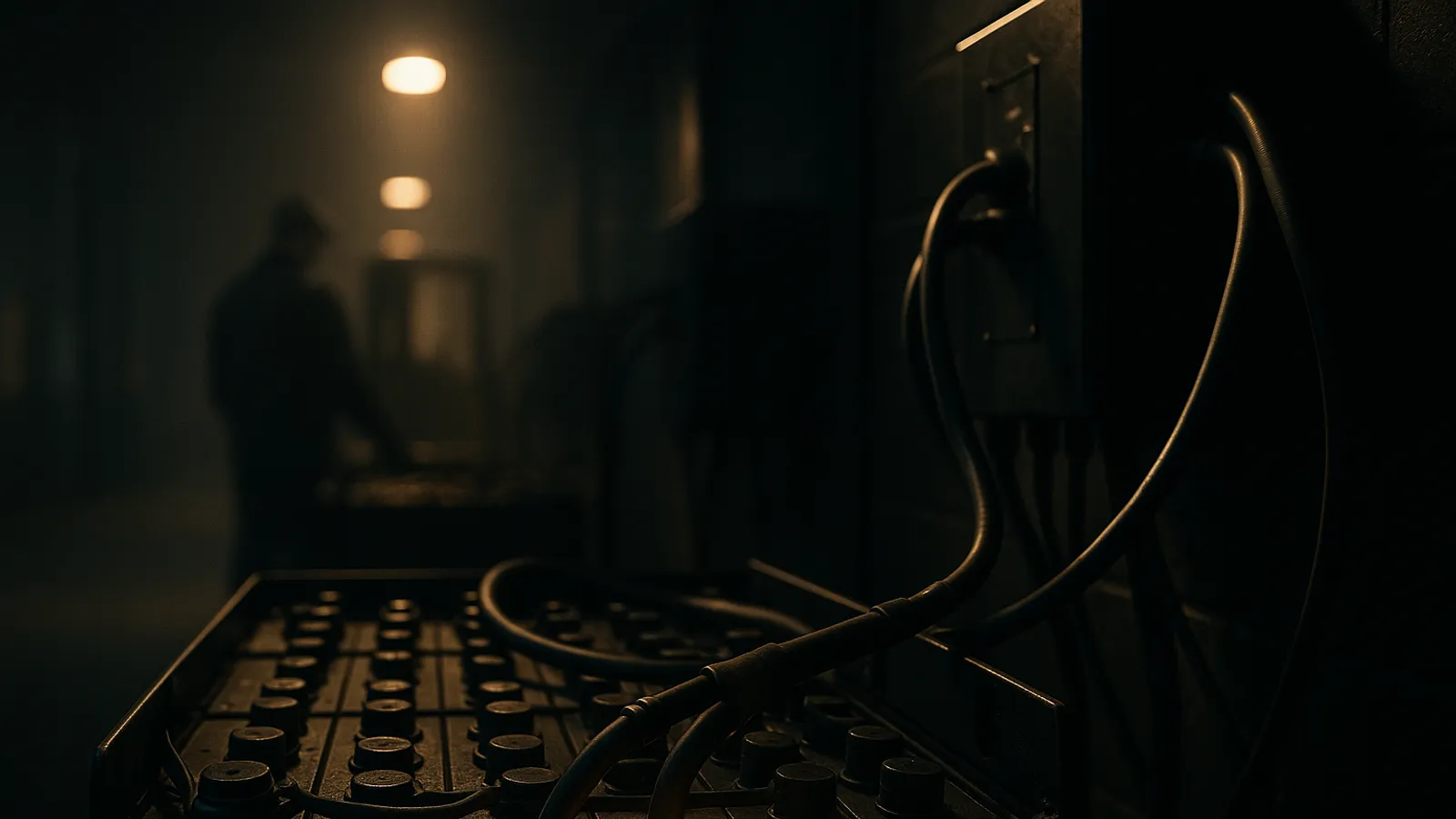
An electric machine means planning the charge. For indoor use, especially across two or three shifts, a few simple rules keep it from sitting idle:
- Plan for an accessible charging point and build the charge time into the schedule.
- Charge between shifts rather than waiting for a full discharge.
- Check the rated runtime against the real working hours per shift.
A lift managed well on the battery side stays available when you need it; a charge that is not anticipated leaves you stopped in the middle of a job.