A successful aerial lift rental is won before delivery. Most of the snags, a machine that comes up short, ground that will not bear the load, a doorway that is too narrow, do not come from the equipment but from an incomplete site prep. A handful of checks up front are usually enough to receive the right mobile elevating work platform the first time and to work without interruption. Here is the checklist to run through before you place the order, point by point, from the real need down to the crews.
Measure the real working height
The first trap is height. Catalogues quote the working height, which is the platform floor height plus roughly two metres, the zone a standing operator can reach. A lift advertised at 12 m of working height therefore puts the platform floor at about 10 m. If the task itself sits at 12 m, aim for a 14 m working height.
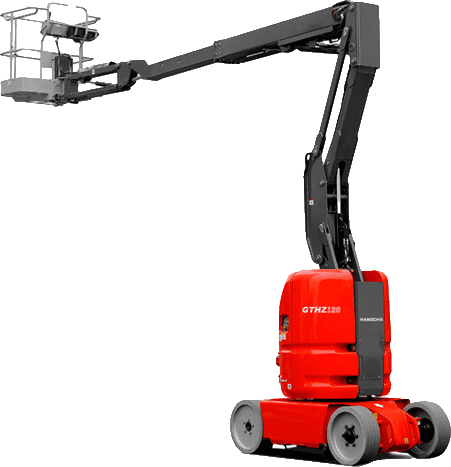
Measure on site with a laser rather than guessing from memory. Note too the horizontal outreach you need if an obstacle stops you from parking the machine directly below the work area. For the detail on aerial lift families and lifting geometries, see our guide Choosing the Right Aerial Lift for Work at Height.
Assess the ground and its bearing capacity
A lift is only as good as the ground beneath it. Before delivery, check:
- Bearing capacity. The ground must carry the loaded machine without sinking. Be wary of recent fill, backfilled trenches, and unstabilised surroundings.
- Slopes and cross-falls. Every machine has an incline limit; beyond it, the lift goes into safe mode and stops elevating.
- Manholes, hatches, and channels. Spot and mark them so a wheel does not drop into one.
- Spreader plates. On soft or fragile ground, they distribute the load under the wheels or outriggers.
- Slab loading indoors. On raised technical floors and suspended slabs, verify the allowable floor pressure before bringing in a heavy machine.
Check access all the way to the work area
A perfectly sized lift is useless if it cannot reach the workstation. Measure the full path, from the delivery point to the work area:
- Width and height clearance of doors and gates.
- Turning radius in aisles and corners.
- Load limit and dimensions of any lift or goods hoist if the machine has to change levels.
- Any threshold, ramp, or step to cross.
The machine's stowed dimensions must fit the tightest point on the route.
Choose the power source for the environment
The environment dictates the powertrain. Indoors, electric is the obvious call: zero emissions to run alongside live operations, quiet running, and non-marking tyres that protect floors. The compact electric scissor lift is the natural choice for indoor work.
Outdoors on rough site terrain, diesel remains the reference: four-wheel drive, ground clearance, and slope compensation. Check the manufacturer's wind limit too: many indoor machines are not rated for exposed outdoor use, whatever their power source.
Prepare the crews and the cordon
The machine is only part of the equation. On the people side:
- Trained, authorized operators for the relevant aerial lift category. Scissor training does not amount to authorization on a telescopic boom.
- Harness in boom lifts, short lanyard clipped to the designated anchor point in the basket.
- A cordoned ground zone beneath the work area, no parking under it, and safe distances kept from overhead power lines.
The four facts that save time
When you make the request, give the rental provider four things. They are usually enough to land the right model the first time:
- The real height you need to reach.
- The ground type and its bearing capacity.
- The access constraints up to the work area.
- The expected duration of the project.
With those four points, the machine delivered matches the need, and the job starts without wasted time.